Choosing an aluminium alloy block involves more than comparing a price per kilogram. You need to match the alloy, temper, product form, dimensions, certification and fabrication method to the finished part, then confirm whether the quoted stock is genuinely available in Mumbai. By the end, you will know what to ask suppliers and when another aluminium form or steel is the better choice.
Key takeaways
- State the alloy, temper, product form and finished dimensions in every quote request.
- Confirm whether the block is cast, rolled, forged or sawn from plate.
- Choose stock that suits machining, welding, strength and dimensional requirements.
- Compare certificates, stock condition, cutting charges, delivery and total landed price.
Specify the alloy and temper before requesting a quote
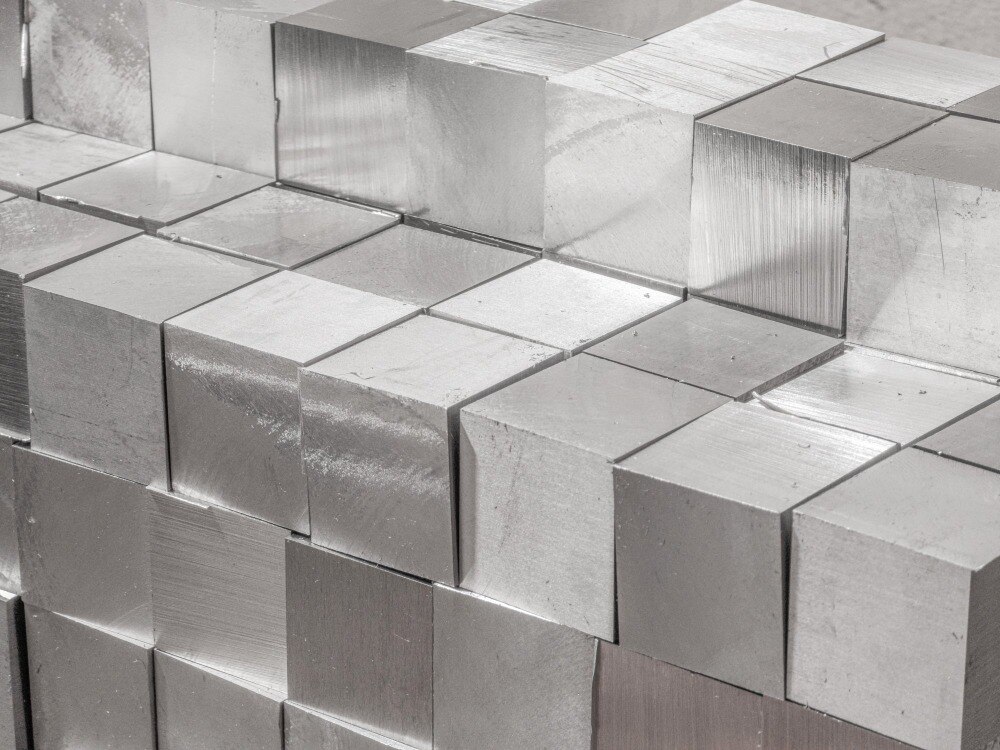
A quotation for aluminium alloy blocks for fabrication is incomplete if it says only “aluminium”. “Block” may mean a sawn piece of plate, rectangular bar, cast block, tooling plate or billet, so specify the alloy, temper, product form and finished dimensions. For machined or structural parts, start by comparing these grades:
| Alloy | Practical starting point | Key limitation |
|---|---|---|
| 6061-T6 | Machining, brackets and general fabrication | Lower strength than 7075 |
| 6082-T6 | Structural and machined parts | Confirm availability in the required thickness |
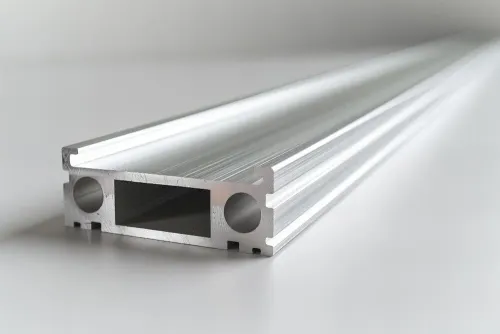
| 6063 | Extruded profiles, frames and architectural sections | Usually not the first choice for solid blocks |
| 7075-T6 | High-strength machined components | Poor default for welded fabrication |
The temper changes fabrication behaviour. O is annealed and easiest to form; H32 is strain-hardened and stabilised; H116 is a marine plate temper; T6 is solution heat-treated and artificially aged; T651 adds stress relief, improving machining stability and reducing distortion.
These tempers affect formability, residual stress and weld-zone performance, so 6061-T651 and 6061-T6 are not interchangeable specifications.
- Request tensile strength, yield strength, elongation, hardness, density and thermal conductivity for the exact alloy and temper, not generic catalogue values.
- Require the heat or cast number, product form and traceability. ASTM B209/B209M covers sheet and plate; ASTM B221/B221M covers extruded products. A cut rectangle is not automatically an extrusion.
Confirm whether the block is rolled, cast, forged or cut from plate
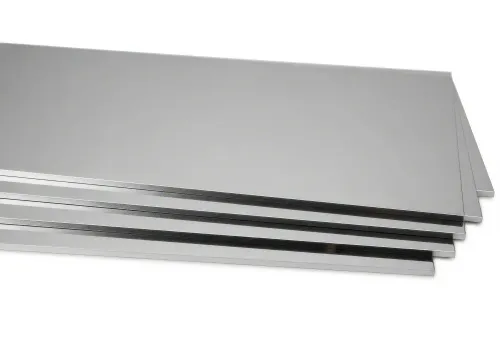
Material form affects grain direction, residual stress and machining behaviour. Rolled plate has directional grain; a block sawn from it must retain the parent plate’s alloy, temper, product standard, heat number and traceability.
Cast tooling plate or cast block offers lower internal stress and better dimensional stability during heavy milling, but it is not automatically equivalent to structural 6061-T6 or 6082-T6. Forged stock has a refined grain structure for demanding components, although its available sizes and supply status require confirmation.
| Form | What it means | Fabrication implication |
|---|---|---|
| Rolled or cut from plate | Directional grain and parent-plate certification | Confirm grain direction, heat number and allowance |
| Cast block or tooling plate | Low-stress stock designed for stable machining | Check mechanical properties; do not assume 6061-T6 equivalence |
| Forged stock | Refined grain produced through forging | Suitable for demanding parts; confirm size and availability |
A 15 mm rectangular plate is not necessarily block stock. Ask whether the item is sold as a machining block, which thicknesses are held, and how much material remains after facing. If you buy aluminium alloy blocks in Mumbai, send an enquiry that states:
- Alloy, temper, product form, length, width, thickness, grain direction and machining allowance.
- Required finish, squareness, flatness and permitted saw tolerance.
- Whether all six faces must be finished, or only cut to size; also ask for the supplier’s block-stock dimensions and facing allowance.
Match dimensions and fabrication methods to the finished part
A 100 × 100 × 50 mm requirement is incomplete for aluminium alloy blocks for fabrication. State permitted saw tolerance, flatness, squareness, corner condition and machining allowance. Ask for the supplier’s available length, width and thickness range, maximum and minimum cut sizes, kerf allowance and remnant policy.
- Order sawn stock for rough blanks when facing and profiling will remove material.
- Use milling or CNC machining for pockets and finished faces; specify whether all six faces need machining.
- Specify aluminium-compatible drills, taps, lubricants and thread depth for holes, because poor tooling can grab the workpiece or damage threads.
- Bend only when the alloy and temper support the required inside radius; a hard temper can crack at a tight bend.
- Use riveting or bolting for assembled parts when welding would weaken a critical joint.
- Choose TIG or MIG welding only after confirming weldability and heat-affected-zone strength. T6 strength falls near welds, and 7075 is not a sensible default for welded construction.
Aluminium’s thermal expansion and conductivity can move dimensions during heavy cutting. Clamp without crushing, use staged roughing passes, remove material from opposing faces in balance, and let the part return toward shop temperature before final machining.
Confirm anodising suitability for the exact alloy and surface condition; a general product listing does not guarantee an even anodised finish.
Compare block stock with plate, flat bar, extrusion and steel
Blocks are the wrong choice when the finished shape does not need a solid starting section. They suit machined brackets, base plates, jigs, fixtures, housings and compact structural parts because one piece reduces joining work; aluminium’s lower elastic modulus still means more deflection than steel of identical geometry, even when yield strength is adequate.
| Option | Better choice | Why |
|---|---|---|
| Block | Compact machined parts | Minimises joints and provides machining stock |
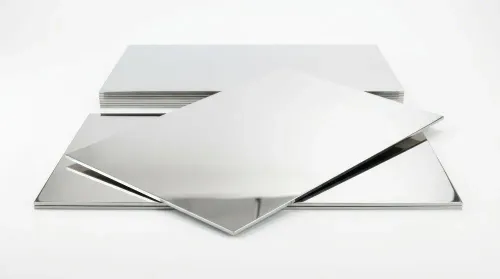
| Sheet or plate | Large flat panels | Covers area with less waste and lower cost |
| Extrusion | Long frame members | Adds section stiffness with less machining and weight |
| Flat bar | Narrow rectangular parts | Reduces offcut and machining waste |
| Steel | Wear, impact, stiffness or heat-critical parts | Offers higher rigidity, tougher wear surfaces, durable threads and better temperature stability |
Before asking an aluminium alloy block supplier in Mumbai to quote, define:
- Load, span and permitted deflection; choose steel when rigidity or impact loading controls the design.
- Wear surface and threaded-hole duty; use steel inserts or a steel component when aluminium threads will be repeatedly loaded.
- Corrosion exposure and joining method; isolate aluminium from steel fasteners or frames with isolation washers, sealants, drainage paths and compatible surface treatment, especially in wet or salt-laden coastal conditions around Mumbai.
- Final dimensions, machining allowance and whether a plate, extrusion or flat bar meets the requirement more efficiently.
Evaluate Mumbai suppliers by documentation, stock and total price
Compare an aluminium alloy block supplier in Mumbai on evidence, not surface colour or a low kilogram rate. Before you buy aluminium alloy blocks in Mumbai, ask whether “available” means exact stock on hand or procurement against order, especially for 7075, tooling plate and unusual thicknesses.
- Confirm alloy and temper, product form (rolled, cast, forged, billet or cut from plate), heat or cast number, length, width, thickness and quantity.
- Confirm stock location, cut-to-size capability, saw tolerance, machining allowance, lead time, minimum order, packing, GST and freight.
- Request a mill test certificate showing chemical composition and mechanical results. Specify EN 10204 type 3.1 in the purchase order when traceability matters; it is not automatic.
- Ask whether all six faces are finished, whether the block is square and flat, and whether a 15 mm plate is being sold as “block” stock.
Appearance cannot prove alloy or temper. Documentation or testing is required; portable X-ray fluorescence can separate alloy families but does not establish heat treatment or mechanical properties.
Aluminium alloy block price in Mumbai is a total-cost question. Compare each charge separately:
| Item | Ask for | Why it changes the decision |
|---|---|---|
| Material | Alloy, temper and weight | Generic aluminium quotes hide grade differences |
| Cutting | Saw kerf and cut fee | Small blanks lose material |
| Machining | Faces, tolerance and allowance | Finish work may exceed stock savings |
| Certification | Mill test certificate or EN 10204 type 3.1 | Traceability costs extra |
| Packing and delivery | Packing, GST and freight | The delivered price can change sharply |
Aluminium World can help when you need Mumbai sourcing, cut-to-size coordination or comparisons across blocks, plates, profiles and fabrication materials.
Related product
 | Aluminium Rolled Plates Aluminium Alloy Blocks are used across construction, roofing, insulation, automotive, and HVAC industries. View product → |
Frequently asked questions
What details should you give an aluminium alloy block supplier in Mumbai?
Give the alloy grade, temper, product form, required dimensions, quantity, tolerances, surface condition and intended fabrication process. State whether you need a cast block, rolled plate piece, forged block, billet or cut bar.
Why does the manufacturing route of an aluminium block matter?
Rolled, cast, forged and plate-cut products have different grain structures, internal stress, porosity risks and machining behaviour. Confirm the route before comparing prices or approving a material for a finished part.
Should you buy an aluminium block, plate, flat bar or extrusion?
Choose a block when the part needs substantial machining or a thick rectangular section. Compare plate, flat bar and extrusion when they reduce sawing, waste or machining time; compare steel when stiffness, temperature resistance or cost per finished part dominates.
How can you evaluate an aluminium alloy block supplier in Mumbai?
Check available stock, alloy and temper identification, mill test certificates, heat or batch traceability, cutting accuracy, packaging, delivery terms and the full price after cutting, freight and taxes.
Keywords