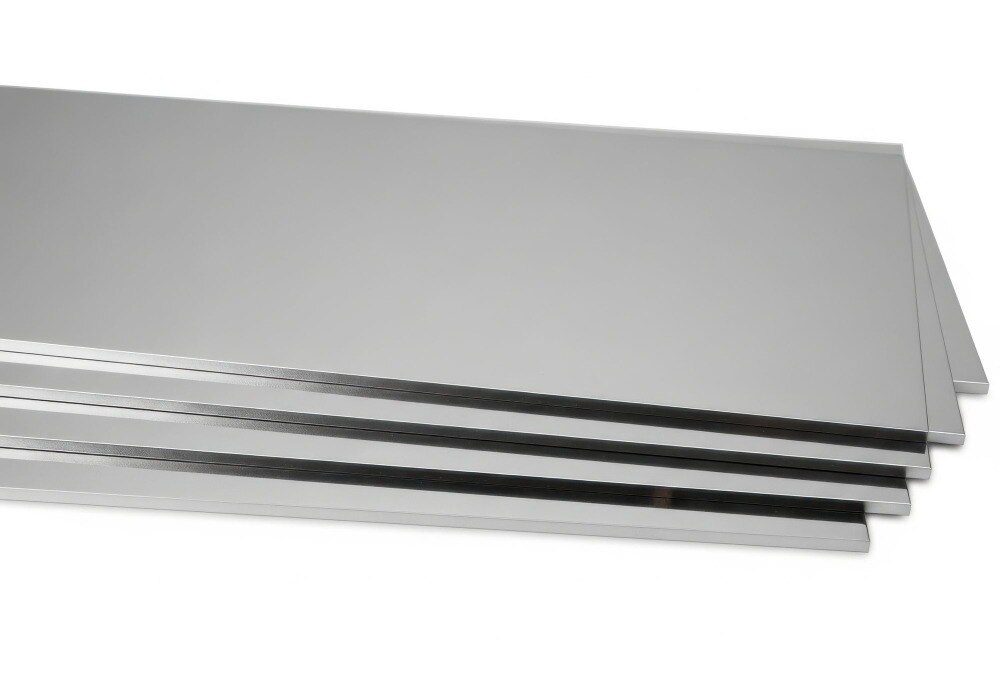
A damaged 5052 sheet is not automatically a welding job: a scratch, dent, crease, puncture, corrosion pit and cracked weld each require a different decision. You will be able to classify the damage, verify the alloy and temper, choose between straightening, patching, welding and replacement, and specify the inspections needed before the part returns to service.
Key takeaways
- Measure cracks, tears and remaining thickness before choosing a repair.
- Confirm alloy 5052, temper, thickness and service conditions from records.
- Use welding for suitable cracks; replace sheets with severe tearing or loss.
- Seal repaired joints and remove trapped moisture to prevent repeat corrosion.
Classify the Damage Before You Touch the Sheet
Repairability starts with evidence, not appearance. Clean the affected area, inspect both faces, photograph it with a scale, and measure damage length and width. Identify both crack ends, check fastener holes for tearing, and use a thickness gauge to record the remaining section beside and within the damage.
- Surface scratches affect finish; grinding them deeper can create section loss.
- A smooth, shallow dent with no crack or thickness loss is different from a sharp, work-hardened crease, which can crack during straightening.
- Punctures, torn edges, corrosion pits and failed welds remove sound metal or continuity.
- A warped panel requires flatness measurements; do not judge it by one face alone.
| Damage type | Initial repair decision | Main concern |
|---|---|---|
| Smooth dent | Consider controlled straightening | Confirm no cracking or thinning |
| Sharp crease | Prefer replacement or engineering review | Work hardening and crack growth |
| Puncture or torn edge | Remove unsound metal and design a patch or replacement | Sound joint and adequate surrounding section |
| Corrosion pit | Measure remaining thickness before any dressing | Hidden section loss |
| Failed weld | Treat as a structural defect, not a cosmetic mark | Porosity, lack of fusion or renewed cracking |
Stop and replace the sheet, or obtain engineering approval, for deep cracks, severe thinning, unknown alloy or temper, pressure-containing parts, load-bearing or lifting components, and fuel or chemical service. Vehicle, marine, façade-safety and code-controlled repairs require approval against the original design or applicable specification.
Cosmetic restoration only makes the surface look acceptable. A structurally acceptable repair also preserves section, load path, geometry and service safety; 5052 aluminium sheet damage that meets only the first test is not repaired.
Verify 5052, Temper and Service Conditions
1. Before you quote to repair aluminium sheet 5052 in Mumbai, confirm the alloy and temper from a mill certificate, material stamp, purchase record or traceability document. Do not identify 5052 by its silver appearance.
The 5052-O, 5052-H32 and 5052-H34 tempers have different strength and forming behaviour, so a repair suitable for annealed O material may be unsuitable for H32 or H34.
2. Check ASTM B209/B209M on the material record when available. It identifies aluminium sheet requirements, but it does not provide a complete repair procedure or acceptance criteria. For load-bearing, pressure-containing, lifting, vehicle, façade-safety, fuel or chemical service, obtain engineering approval against the original design or governing specification.
3. Clean the inspection area before judging damage in Mumbai conditions. Remove salt, rainwater residue, oil, paint, sealant and industrial contamination, then inspect drainage paths, lap joints and trapped-water areas. Contamination can hide pitting and crevice corrosion.
4. Remember that 5052 is non-heat-treatable: its strength comes from cold working. Welding locally removes the original H-temper in and around the heat-affected zone, and ordinary site welding cannot restore it. Avoid uncontrolled prolonged heating around 150–200 °C; magnesium-bearing 5xxx alloys can become sensitized and more vulnerable to intergranular corrosion in salt or chemical service.
A later coating does not reverse that damage.
Match the Repair Method to the Damage
A scratch that has not reduced thickness needs controlled dressing, not deep grinding. Blend the mark with aluminium-compatible abrasives, then apply a compatible paint, powder coat or anodic finish; grinding into deeper damage reduces the 5052 aluminium sheet section.
| Method | Suitable damage | Limit |
|---|---|---|
| Controlled dressing | Surface scratches | Stop before measurable thinning |
| Cold straightening | Limited, smooth bend | Use a press with broad tooling and adequate access; do not promise original condition for a sharp crease, crack or severe distortion |
| Dent repair | Shallow dent without cracking or section loss | Support the sheet, work gradually from the perimeter, measure flatness, and stop before thinning or forming a new sharp fold |
| Cut-out and patch | Holes, tears and badly creased areas | Remove unsound metal, use rounded corners, fit the patch accurately, and retain adequate sound metal around the joint |
For a puncture, torn edge or crack, do not weld over unidentified damage. Remove the unsound area and use a correctly fitted patch or replacement section; stop-drilling alone does not restore strength or sealing. If you need to repair aluminium sheet 5052 in Mumbai, specify the service load and finish before choosing the joint.
For compatible fabrications, remove oil and sealant, then remove oxide immediately with aluminium-dedicated tools. Use suitable backing and fit-up, limit heat input and unnecessary weld length, and sequence welds to control distortion. Inspect for burn-through, porosity, undercut, pinholes and lack of fusion.
Use 5356, 5183 or 5556 only when the welding procedure selects the filler; 4043 is not an automatic substitute.
Check the Finished Repair and Prevent Repeat Corrosion
A repair is safe and durable only after inspection proves sound metal, acceptable geometry and, where required, leak-tightness. A weld can remain weaker or more corrosion-prone than the parent 5052 sheet because temper loss, crevices and heat effects survive after cooling.
- Clean the repair, then inspect both faces for porosity, undercut, incomplete fusion, pinholes, surface cracks, burn-through and renewed cracking. Check the weld profile and surrounding surface for sharp transitions or trapped debris.
- Measure length, width, flatness and critical dimensions against the drawing or agreed tolerances. Verify repaired thickness with a thickness gauge; do not accept a dressed weld that has reduced the sheet below its specified minimum.
- Leak-test any panel containing liquid, gas or vapour using the method and pressure specified for the service. Dye-penetrant testing suits clean, non-porous surfaces and finds surface-breaking cracks, but it does not prove leak-tightness or internal weld soundness.
- Record the filler wire, welding process, heat-control method, dimensional tolerances and every inspection result. Keep photographs and test reports with the repair record.
Prevent repeat corrosion by isolating aluminium from carbon steel, copper, brass and stainless-steel interfaces with specified compatible fasteners, nonconductive washers, coatings or sealants. Inspect the whole joint, not only visible white corrosion.
Mumbai’s coastal humidity and monsoon rain demand drainage, sealed lap joints and protected fastener interfaces. Remove trapped water beneath backing strips or trim. Ask an aluminium sheet repair service in Mumbai to address the entire joint, because sealing one visible corrosion spot will not stop attack hidden behind it.
Choose Repair or Replacement and Brief a Mumbai Service Provider
Replacement is often better when the sheet is thin, severely thinned, deeply cracked, badly warped, inaccessible, or likely to fail again after welding. Compare the complete repair burden before choosing:
| Option | Full burden | Main risk or cost |
|---|---|---|
| Repair | Cleaning, removal, access, fixturing, cutting, welding, distortion control, inspection, repainting or anodising, and downtime | A thin repaired area can fail again after temper loss, heat damage or recurring corrosion |
| Replacement | Removal, matching material, cutting, refitting and finishing | Minimum order quantities, lead time and installation cost |
| Decision | Compare the installed total, not the welding charge | A quick patch can cost more after repeated rework |
Before you repair aluminium sheet 5052 in Mumbai, ask an aluminium sheet repair service in Mumbai:
- Have you repaired 5052-O, H32 or H34, and which welding process and filler wire will you use?
- Do you have a qualified welding procedure, inspection records, dimensional tolerances, post-repair testing and warranty or rework terms?
- Is workshop removal practical, or can you work on site?
Send photographs of both faces, thickness, alloy and temper records, dimensions, service fluid, load or pressure, finish, access, delivery location and required date before requesting a quote. For pressure, lifting, vehicle, façade-safety or code-controlled work, require design review and defined testing.
Aluminium World can supply replacement 5052 sheet or plate, cut dimensions, identify material and coordinate a fabricator; stock supply alone does not repair an installed component. Require matching thickness, temper, finish, dimensions and certification—not merely “aluminium” or “5052.”
Related products
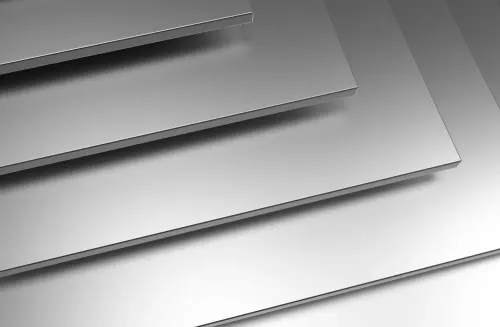
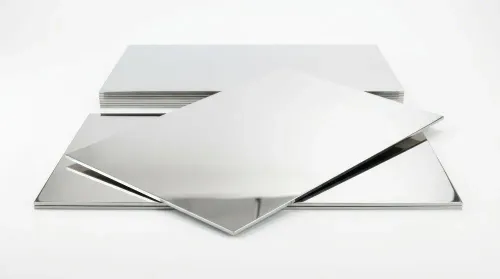
 | Aluminium Sheets & Plates Aluminium Sheet 5052 is a versatile alloy with excellent corrosion resistance, formability, and strength, widely used in marine, automotive, and... View product → |
 | Aluminium Sheet Minimum Order Quantity: 100 Kg Thickness all thickness Material Aluminium Color Silver Shape Rectangular Is It Anodised Anodised Grade 5052... View product → |
Frequently asked questions
How do you classify damage in a 5052 aluminium sheet?
Clean the sheet, inspect both faces, photograph the area with a scale, measure the damage, identify crack ends and check fastener holes for tearing. Record remaining thickness with a thickness gauge.
What must you verify before repairing 5052 aluminium sheet?
Confirm the 5052 alloy, temper, sheet thickness and service conditions, including exposure to salt water, chemicals, heat, vibration and repeated loading.
Which repair method suits damaged 5052 aluminium sheet?
Match the method to the defect: welding can suit suitable cracks, while a bonded or mechanically fastened patch can suit local damage. Replace the sheet when tearing, section loss or distortion compromises its function.
How do you prevent corrosion after repairing aluminium sheet?
Inspect the repaired area for incomplete fusion, porosity, sharp edges and gaps. Remove contamination, seal joints, isolate dissimilar metals and prevent water from remaining at the repair.
What should you tell an aluminium sheet repair service in Mumbai?
Provide the alloy and temper, thickness, dimensions, damage photographs, measurements, service conditions, loading requirements and any drawings or inspection records.
Keywords