A 12mm plate is selected for stiffness, thread depth, impact resistance or machining allowance—not simply because a drawing specifies a heavier-looking material. You will be able to match the plate to Mumbai fabrication applications, choose an alloy and temper, estimate order weight, and check whether the delivered material is fit for cutting, welding and installation.
Key takeaways
- Use 12mm plate for concentrated loads, impact guards and tapped holes.
- Select plate geometry around load paths, fasteners, bends and access requirements.
- Match alloy and temper to welding, corrosion, machining and service conditions.
- Specify alloy, temper, dimensions, quantity and inspection documents before ordering.
Where 12mm plate earns its place in a fabricated assembly
Choose 12mm plate when a part must resist bending, repeated impact or concentrated fastener loads without relying on a supporting frame. That makes it suitable for machine bases, motor mounting plates, jigs, fixtures, access covers, impact guards and heavy-duty equipment panels. It also provides enough material for drilled holes, countersinks and tapped threads.
| Option | Rigidity and load path | Choose it when |
|---|---|---|
| Sheet | Low bending resistance; easy to form | The cover carries no equipment or impact |
| Flat bar or extrusion | Stiff along one axis or its profile | The load follows a narrow edge or frame line |
| Welded frame | High stiffness with less solid material | A large platform needs a lightweight skeleton |
| 12mm plate | Broad, continuous load-bearing surface | Loads, bolts or wear are spread across the whole part |
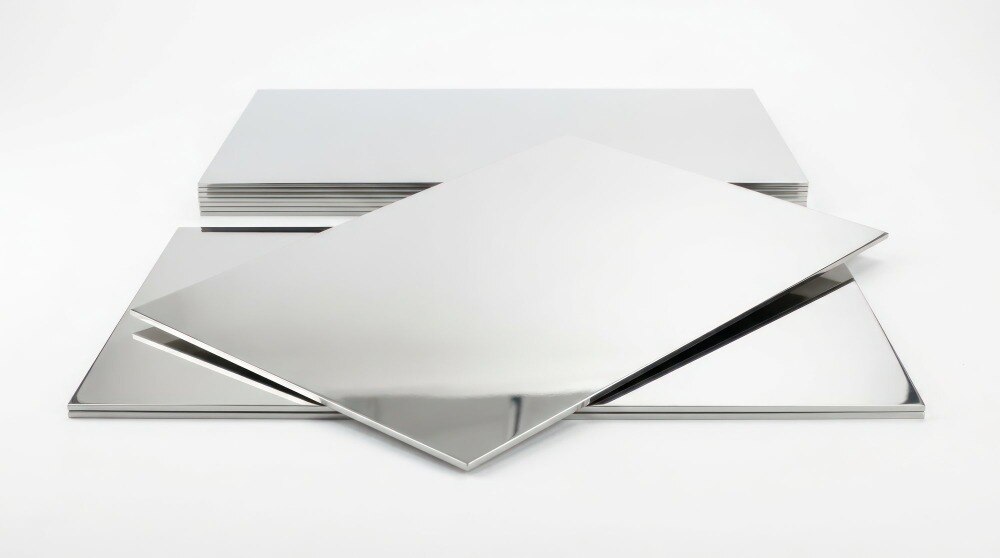
Common 12mm aluminium plate uses include tank and hopper panels, fabrication templates, machine guards, trays, platforms and custom-machined components. A solid plate earns its place where vibration would flex sheet, where an extrusion leaves unsupported areas, or where a welded frame would create joints, crevices and extra alignment work.
For 12mm aluminium plate fabrication in Mumbai, check access and handling before choosing a large solid panel: it weighs more than a framed equivalent and demands accurate cutting, drilling and lifting.
If welding joins the part to a bracket or frame, design around the welded condition rather than assuming the parent plate retains its original heat-treated strength. These are practical 12mm aluminium plate applications, not a reason to use 12mm everywhere.
Base plates, guards and custom parts: choosing the right geometry
Choose 12mm plate when the part needs stiffness, a wear allowance, impact resistance or enough material for tapped threads. Do not choose it by thickness alone: aluminium deflects far more than steel, so span, load, support spacing and connection design decide whether a plate works.
| Option | Geometry decision | When 12mm applies |
|---|---|---|
| Base plate | Keep it flat with mounting holes and adequate edge distance | Machine feet, pumps or equipment needing a rigid bolted foundation |
| Bracket | Add gussets, bends or machined steps where loads create leverage | Use for supports, jigs and fixtures; check weld-zone strength |
| Cover or guard | Use a flat panel with folded edges, ribs or removable fasteners | Impact protection and access covers where thin sheet oil-cans |
| Panel or partition | Add a frame or intermediate supports | Heavy-duty enclosures; do not rely on a large unsupported span |
| Tray or hopper panel | Provide formed sides, drains and radiused corners | Loads, abrasion or thread depth justify the extra thickness |
| Platform | Design supports beneath it and verify deflection | Short-span walkways, machine platforms and service steps |
| Machined component | Leave stock for pockets, bores and tapped holes | Custom blocks, templates and precision mounting parts |
These are practical 12mm aluminium plate applications, not automatic structural replacements for steel. For aluminium plate for industrial fabrication, confirm alloy and temper before machining or welding: 6061-T6 loses strength in the heat-affected zone, so design welded parts using welded-condition properties. A welded frame may suit the load better than one oversized plate.
How Mumbai workshops cut, form, machine and weld 12mm plate
At 12mm, the plate changes from a blank into a finished part: cutting affects its edge, machining affects accuracy, and forming or welding affects strength and shape. In a Mumbai workshop, choose the process against the drawing rather than treating every 12mm aluminium plate uses as a simple cut job.
| Process | What changes | Workshop control |
|---|---|---|
| Bandsawing | Leaves a mechanical saw edge and can introduce burrs or slight squareness error. | Use a blade suited to aluminium, clamp the plate firmly and deburr the cut. |
| Waterjet, plasma or laser | Waterjet avoids a heat-affected zone. Plasma and laser add heat, oxide or dross, with possible distortion and edge hardening. | Specify the edge condition and allow machining stock where a precise edge matters. |
| Milling or routing | The cutter can grab aluminium or build up welded material on its teeth. | Use sharp, high-clearance tools, secure chip evacuation and coolant suited to aluminium. |
| Drilling | A 12mm plate needs controlled feed and chip clearance; poor technique leaves oversized or burred holes. | Spot the hole, use a sharp drill and deburr both faces before bolting or tapping. |
| Bending | Thickness increases forming force, springback and the required inside radius. | Confirm alloy and temper, then test the bend radius before production. |
| Welding | Heat changes alignment and reduces strength near the weld; 6061-T6 loses its T6 condition in the heat-affected zone. | Use a qualified procedure, suitable filler and welded-condition design values. |
| Bolting | Clamping can distort the plate, while dissimilar fasteners can accelerate galvanic corrosion. | Use washers, correct torque and isolation where aluminium contacts another metal. |
For aluminium plate for industrial fabrication, separate material supply from fabrication on the drawing or quotation. State the cut size, hole pattern, threads, edge finish, bend details, weld procedure and inspection points.
Alloy, temper and finish choices that control service life
A 12mm plate can last for decades or fail early, depending on alloy, temper, weld design and surface protection. “Plain” means an untextured, normally mill-finished surface; it does not identify strength, corrosion resistance or weldability. For 12mm aluminium plate applications, specify the alloy and temper rather than accepting “12mm plain plate” as a complete description.
Check these service-life controls before fabrication:
- 6061-T6 offers useful machined-part strength, but welding softens the heat-affected zone. Design the welded condition, not the original T6 strength.
- 5xxx alloys suit corrosion-exposed, welded work through their non-heat-treatable temper. Match the grade to the chemical and load environment.
- Select filler by alloy and service: 4043-type filler improves fluidity and crack resistance in many 6xxx welds, while 5356-type filler can provide higher weld strength but is unsuitable for some high-temperature or chemical service.
- Require the welding procedure to identify filler, joint preparation and inspection against AWS or an equivalent requirement.
Mumbai’s coastal air makes mill finish a poor substitute for protection on exposed parts. Anodizing increases surface hardness and corrosion resistance; paint adds a barrier but depends on cleaning, pretreatment and edge coverage. A 5xxx plate and a 6xxx plate can anodize to visibly different colours, so approve a sample when appearance matters.
Aluminium plate for industrial fabrication should also include flatness, coating and weld-condition requirements on the drawing.
How to specify, calculate and inspect a 12mm plate order
“12mm aluminium plate” is not a complete purchase description. ASTM B209 classifies material over 6.30 mm as plate, so ask for plate against a stated alloy and temper, not generic “sheet.” A plain aluminium plate supplier in Mumbai should quote against the same specification so price and performance are comparable.
1. Write the material grade, temper, nominal 12 mm thickness, permitted thickness tolerance, length, width, quantity and mill-finish requirement. Add the edge condition, flatness limit, required mill test certificate, and whether the supplier or fabricator must provide holes, slots, tapped threads, bends or machined faces.
2. Calculate approximate mass before comparing freight or quotations: length in metres × width in metres × 12 × 2.7 gives kilograms for aluminium. A 1.2 m × 2.4 m plate therefore weighs about 93.3 kg; confirm the invoiced mass against the actual alloy and cut dimensions.
3. Separate fabrication instructions from material supply. State hole coordinates, weld procedure and filler alloy, surface protection, drawing revision and inspection standard. For outdoor work, specify anodising or paint rather than assuming mill finish provides that protection. In 6061-T6, design welded zones using welded-condition strength, not the original T6 value.
4. Before acceptance, match the heat or batch number to the certificate, measure thickness at several points, check length, width and flatness, and inspect edges, dents, scratches, corrosion marks and lamination-like defects. Reject unapproved substitutions or undocumented repairs.
Aluminium World can help a buyer keep the plate certificate separate from the 12mm aluminium plate fabrication in Mumbai inspection record.
Related products
 | Aluminium Plate ₹ 279/KgGet Latest Price Minimum Order Quantity: 100 Kg Thickness 12 mm Pattern Plain Shape Rectangular Material Aluminium Surface Treatment Polished... View product → |
 | Aluminium Sheet Minimum Order Quantity: 100 Kg Thickness all thickness Material Aluminium Color Silver Shape Rectangular Is It Anodised Anodised Grade 5052... View product → |
Frequently asked questions
Where are 12mm aluminium plates used in fabricated assemblies?
They are used for machine bases, motor mounting plates, jigs, fixtures, access covers, impact guards and heavy-duty equipment panels where bending resistance and concentrated load capacity matter.
How do you choose the geometry for a 12mm aluminium plate part?
Define the load path first, then select a flat base plate, guard, cover or custom profile with suitable edge distances, bend allowances, holes and access clearances.
How do Mumbai workshops fabricate 12mm aluminium plate?
Workshops cut plate to size, machine holes and slots, form it when the alloy and temper permit, and weld assemblies using a process and filler suited to the selected alloy.
Which alloy, temper and finish should you specify?
Choose the alloy and temper according to strength, corrosion exposure, machinability and weld requirements, then specify a finish that suits cleaning, appearance and service conditions.
What should a 12mm aluminium plate order include?
State alloy, temper, thickness, length, width, tolerances, cut geometry, hole details, surface condition, quantity and the inspection or material documents you require.
Keywords