An aluminium frame can reduce handling effort and support clean, reconfigurable construction, but its value depends on profile design, connection details, exposure and the full installed cost. By the end, you will be able to compare aluminium with welded steel, timber, cold-formed steel and prefabricated systems, then specify the alloy, temper, finish and testing your project actually needs.
Key takeaways
- Compare lifecycle cost, not profile purchase price alone.
- Choose the alloy and profile for the load, span and environment.
- Specify drainage, thermal breaks, fasteners and tolerances before fabrication.
- Reject aluminium when custom tooling and connections outweigh operational savings.
When does aluminium cost less over a commercial project’s life?
Aluminium extrusion frames are worth the cost when reduced installation effort, corrosion resistance, modularity or reconfiguration outweigh higher design and connection costs. Compare the complete lifecycle bill: profile material, custom-die tooling, machining, cutting, drilling, finishing, transport, assembly, installation, access equipment, maintenance and replacement—not the purchase price alone.
| Option | Cost advantage | Best fit |
|---|---|---|
| Stocked aluminium | At about 2.7 g/cm³ versus carbon steel’s 7.8 g/cm³, lower mass reduces handling, lifting and erection effort | Repeated partitions, storefronts and modular frames |
| Welded steel | Higher mass, but better stiffness and capacity for the same practical budget | Long spans, high loads, impact or severe structural demand |
| Timber, cold-formed steel or prefabricated systems | Often lower first cost or faster installation | Straightforward layouts where detailing, fire treatment or speed dominates |
A custom aluminium extrusion frame is easiest to justify when repeated quantities amortise the die and development costs, or when one profile combines glazing pockets, gasket grooves, drainage paths, screw channels or concealed reinforcement. For a small storefront, repair or one-off frame, price a modified stock section before approving a custom die.
Extrusion can reduce part count, but machining and connection design still add cost. The aluminium extrusion frame benefits disappear if installers need complex access equipment or bespoke joints. Include scheduled cleaning and maintenance, coating repairs, replacement panels and future reconfiguration in the comparison.
Welded steel wins when span and load govern; aluminium wins when its lighter, corrosion-resistant, modular assembly saves more on site and over the project’s life.
What frame role, profile and alloy does the building actually require?
Separate the frame’s job before choosing its section. A decorative frame carries appearance or light trim; a non-load-bearing partition frame carries panels, doors or glazing; a structural frame may carry roof dead and live loads, glazing, equipment supports, wind pressure or vibration and needs an engineer’s design check.
Profile width alone cannot select an aluminium frame for commercial buildings. Check span, deflection, buckling, local buckling, glass bite, fastener capacity, slab-edge anchors and connection stiffness against partition loads, equipment vibration, building height and wind actions under IS 875 (Part 3). Wind pressure changes with height, terrain, geometry and openings.
| Role | Typical duty | Design consequence |
|---|---|---|
| Decorative | Appearance or light trim | Check attachment and finish, not structural capacity |
| Partition | Panels, doors or glazing | Check panel weight, deflection, glass bite and joints |
| Structural | Roof, façade, equipment or wind support | Engineer checks member strength, buckling, anchors and connections |
Use 6063 for complex architectural shapes and a better surface finish. Use 6061 where higher structural strength governs, accepting less forgiving extrusion and fabrication choices. Specify the alloy and temper—such as 6063-T5 or 6061-T6—only when design calculations and supplier data support it; “aluminium” and “8020” are not engineering specifications.
For a custom aluminium extrusion frame, state wall thickness, corner geometry and reinforcement requirements. Thin walls can buckle locally, while concealed reinforcement can improve capacity without changing the visible profile. A custom profile earns consideration when it integrates these needs; otherwise compare a stocked section first.
How durable is an aluminium frame in real commercial conditions?
Durability is a failure question, not a promise that the extrusion will last forever. Check for dents from handling and impact, local buckling from concentrated loads, fatigue cracks from repeated vibration, and slotted or bolted joints that loosen, elongate or tear. Over-tightened fasteners can crush thin walls or strip threads.
Aluminium expands about 23 micrometres per metre per °C. A 10 m member crossing a 40°C change moves about 9.2 mm, so provide movement joints and tolerant fixings; rigid restraint can bow members or open seals.
| Exposure or finish | Main risk | Required control |
|---|---|---|
| Mumbai coastal salt or industrial pollutants | Pitting, staining and galvanic corrosion | Compatible fasteners, isolating washers or tapes, sealed cut ends where appropriate, no standing water, scheduled cleaning and inspection |
| Indoor humidity | Condensation and joint corrosion | Drainage, compatible metals, inspection of wet areas |
| Sheltered interior | Impact, vibration and loose connections | Protect edges, check fastener torque and retighten or replace damaged joints |
Anodizing forms an integral oxide layer, but appearance depends on alloy, pretreatment and process control. Powder coating depends on pretreatment, film thickness, curing and exposure. Specify a recognized class, such as Qualicoat Class 2 or an appropriate anodizing class, plus colour-retention and corrosion requirements; “anodized” alone is incomplete.
Aluminium loses strength as temperature rises and melts near 660°C. Fire performance belongs to the tested assembly, including glazing, seals, insulation and attachments—not the metal alone. That defines aluminium frame durability in service.
Which installed details decide whether the frame performs?
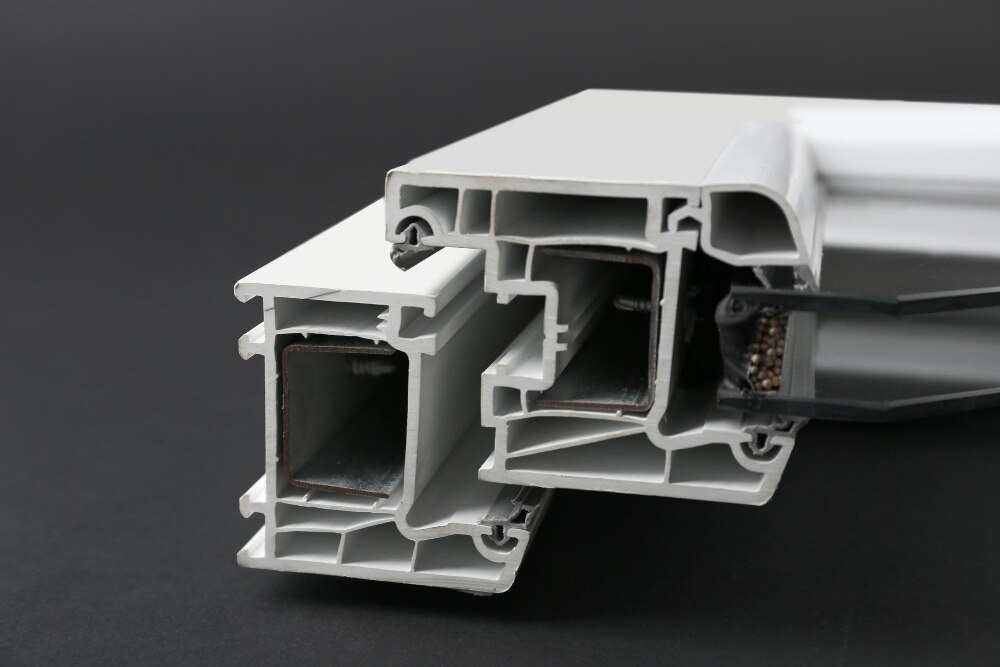
A sound extrusion can still fail as a commercial assembly when gaskets, drainage, sealant, corners, glazing spacers or anchors are wrong. For façades, windows and storefronts, require project-appropriate air, water and structural test evidence for the complete system—not an alloy grade presented as proof.
| Detail | Failure risk | Required check |
|---|---|---|
| Gaskets and drainage | Leaks, condensation and blocked water paths | Continuous seals and open drainage holes |
| Corners and joints | Racking, air leakage and water entry | Secured, sealed mitres and tested mullion-transom joints |
| Anchors and glazing | Deflection, loosening or glass stress | Engineer’s fixing design and system test evidence |
For thermally conditioned buildings, compare the tested U-value of the complete frame-and-glass system. An unbroken aluminium section is a thermal bridge; a polyamide thermal break reduces heat flow and condensation risk. Metal screws crossing the isolator, uninsulated corners, discontinuous gaskets and poorly detailed mullion-transom joints recreate that bridge.
Use this inspection list before approval:
- Approve shop drawings showing joints, drainage, gaskets, anchors and thermal breaks.
- Review a corner and joint sample.
- Verify drainage holes are open.
- Check mitred corners are mechanically secured and sealed.
- Inspect coating at cuts.
- Assign responsibility and deadlines for remedial work.
Repeated reconfiguration is an aluminium extrusion frame benefit only when slotted connections, replacement panels and fastener access are designed in advance. Aluminium World or another supplier should provide section drawings, alloy and temper certificates, finish data, tolerances and fabrication guidance—not only a catalogue description.
Related products
 | Aluminium Extrusions Length 12 Feet Shape Square Usage/Application Industrial Design Germany Thickness standard Surface Finishing standard We, “Aluminium World” are a... View product → |
 | Aluminium Extrusions Minimum Order Quantity: 100 Kg Usage/Application Construction Thickness 8 mm Surface Finishing Polished Alloy Or Not Is Alloy Is It Anodized Anodized... View product → |
What should your commercial-frame specification and decision test include?
The go-or-no-go question is simple: are aluminium extrusion frames worth it after installation, maintenance and change costs are counted? Approve a custom aluminium extrusion frame only when its whole-system evidence and lifecycle total beat the alternatives.
- Record building height, terrain and wind pressure under IS 875 (Part 3), span, supported loads, vibration, glazing or panel weight, indoor temperature and humidity, coastal or polluted exposure, target service life, fire strategy and planned reconfiguration.
- Require drawings naming profile size, wall thickness, alloy, temper, finish, thermal-break geometry, joints, anchors, gaskets, drainage and movement allowances.
- Ask for calculations or test evidence covering structural resistance, deflection, air, water, thermal and fire performance where relevant. Check the assembly, not just the extrusion.
| Option | Installed first cost | Scheduled maintenance | Replacement or reconfiguration cost |
|---|---|---|---|
| Aluminium extrusion | Moderate to high; low mass can reduce handling and erection | Cleaning, gasket and finish inspections | Low when connections and panels are modular |
| Welded steel | Competitive for heavy sections and long spans | Coating, corrosion and weld inspections | Higher when cutting, welding and repainting are needed |
| Timber or cold-formed steel | Often lower first cost | Fire treatment, moisture or corrosion control | Depends on detailing and access |
| Prefabricated framing | Higher system commitment | Supplier-defined maintenance | Low for repeated layouts, costly outside the system |
Aluminium is a strong choice for lightweight modular façades, partitions, storefronts, equipment enclosures and repeated layouts. Welded steel often suits severe structural demand, impact or long unsupported spans; timber and cold-formed steel remain credible where detailing, fire treatment or cost wins.
Aluminium frame durability earns approval only when evidence and lifecycle cost do—not when the material label sounds premium.
Frequently asked questions
When does an aluminium extrusion frame cost less over a commercial project’s life?
It can cost less when installation speed, corrosion resistance, modular reconfiguration and lower replacement needs offset tooling, machining, connections and finishing costs.
Which aluminium profile and alloy does a commercial building require?
Select the frame role first, then specify the profile geometry and alloy for its loads, span, exposure, finish and connection method.
How durable is an aluminium frame in commercial conditions?
Durability depends on alloy, surface finish, water management, galvanic compatibility, fasteners, cleaning and the building’s exposure to moisture or chemicals.
Which installed details decide whether an aluminium frame performs?
Drainage paths, movement allowances, thermal breaks, sealants, fasteners, tolerances and properly supported connections determine real-world performance.
What should a commercial aluminium-frame specification include?
Include the frame role, alloy and temper, profile dimensions, finish, tolerances, loads, connections, drainage, thermal requirements, testing and lifecycle decision criteria.
Related products
 | Aluminium Extrusions 12mm Polished Aluminium Extruders Minimum Order Quantity: 50 sq ft Usage/Application Construction Thickness 12 mm Surface Finishing Polished Alloy Or Not Is Alloy Country of Origin... View product → |
 | Aluminium Extrusions Length 12 Feet Shape Square Usage/Application Industrial Thickness standard Surface Finishing standard We, “Aluminium World” are a “Manufacturer And... View product → |
 | Aluminium Extrusions Aluminium Extrusions For Glass Minimum Order Quantity: 50 Kg Usage/Application Industrial Thickness 10 mm Surface Finishing Polished Alloy Or Not Is Alloy Color Silver Country of... View product → |
Keywords