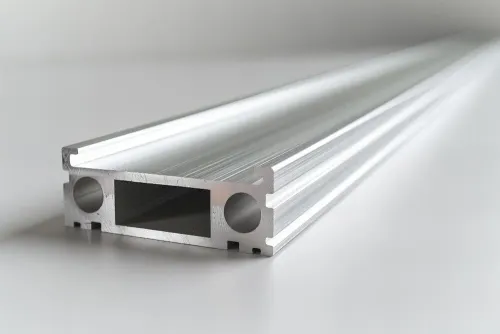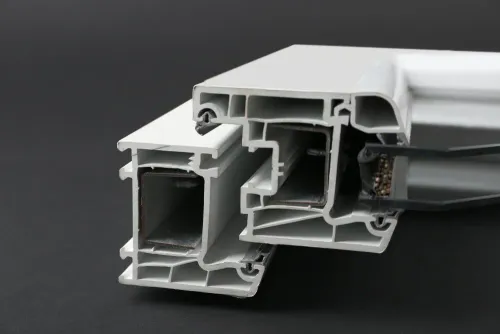
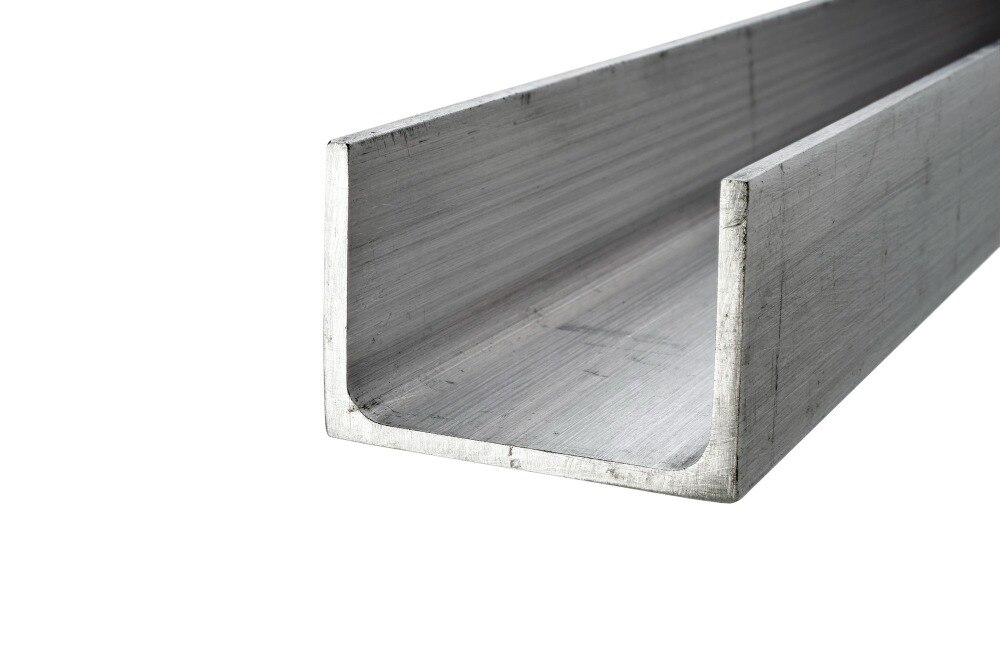
The trade names do not tell you whether two channels will perform the same job: a U channel may be extruded, folded or press-braked, while a designed extrusion may include screw bosses, grooves or drainage paths. You will be able to compare sections by geometry, fit, strength, finish, corrosion exposure, fabrication effort and total project cost before requesting a quotation.
Key takeaways
- U channel describes shape; extrusion describes the manufacturing process.
- Check outside width, inside width, depth, wall thickness and length before ordering.
- Match alloy, temper, load, span and finish to Mumbai exposure conditions.
- Choose stock, custom extrusion or fabricated channel based on fit and lead time.
Are an aluminium channel extrusion and an aluminium U channel actually different products?
Not automatically. A U channel describes the cross-section; extrusion describes how the section is made. An aluminium U channel may be an extruded profile, while another U section may be roll-formed or press-braked from sheet.
| Option | Key characteristics | Suitable use |
|---|---|---|
| Simple open U | Basic legs, less controlled inside radius, springback, bow, twist and cut squareness; finish depends on forming and handling | Edge protection, trim, sheet or glass retention, sliding parts and light framing on short runs |
| Designed extrusion | Controlled outside dimensions and wall distribution, repeatable radius and finish, plus screw bosses, glazing grooves, snap-fit legs or drainage paths | Structural frames, rails, machine guards and repeated assembly where fit and joining details justify design work |
The aluminium channel extrusion versus aluminium U channel comparison must therefore include dimensional precision, inside corner radius, springback, bow, twist, cut squareness and visible surface finish. A folded section may suit a simple short run; a designed extrusion earns its additional work when consistent fit, integrated joining or repeated disassembly matters.
Do not specify only “aluminium channel”. State the manufacturing process, alloy, temper, wall thickness, outside dimensions, inside width, leg height, corner radius and straightness. For a glazing bead or partition trim, also control opening tolerance, cut-end burrs and finish. This aluminium channel extrusion comparison should begin with the channel’s job, not its trade name.
How do you check channel dimensions and fit before ordering?
A reliable fit check for aluminium u channel for projects starts with the material entering the opening, not the channel’s nominal size. Measure the maximum thickness of the glass pane, sheet edge, gasket, insert, roller or mating profile where clips, seals or fasteners will sit.
Compare it with the channel’s inside width, then add clearance for thermal movement, fabrication variation, coating thickness and sliding movement.
| Dimension | Check before ordering | Why it matters |
|---|---|---|
| Inside width | Material thickness plus working clearance | Prevents binding or crushed seals |
| Outside width and leg height | Compare with the recess and adjacent parts | Avoids interference during installation |
| Wall thickness and corner radius | Match the drawing or approved sample | Controls stiffness, fit and visible gaps |
| Overall length | Confirm stock and cut length | Prevents joints or unusable offcuts |
Reserve room for screw heads, washers, rivet nuts, clips and tool access. Ask the supplier to state allowable tolerances for:
- Opening width, leg height and wall thickness
- Bow, twist, cut length and cut squareness
- Burr condition and deburring at cut ends
For visible trim, a glazing bead or a partition connection, approve a physical mating sample or identify the profile drawing revision. A long member needs movement allowance: aluminium changes about 5.5 mm over 6 m across a 40°C temperature swing.
Use slotted fixings, end gaps or expansion joints so a tight fit does not become a bowed assembly.
When is a channel strong enough for Mumbai loads and exposure?
1. A channel is strong enough for Mumbai loads only after you define the load path, not because its wall looks thick. Separate decorative trim, edge protection and covers from load-bearing members; record the span, unsupported length, point loads, distributed loads, wind exposure, vibration and connection method.
2. For an aluminium channel extrusion comparison, request cross-sectional area, mass per metre, moment of inertia, section modulus and declared dimensional tolerances. A nominal size or visually heavier wall does not prove lower deflection or greater strength. With the project engineer, use those properties to check bending, local buckling, fastener loads and permissible deflection.
3. Put the alloy and temper on the specification. 6063-T5 or 6063-T6 suits many architectural shapes and finishes; 6061-T6 provides higher strength but is less convenient for complex profiles. Verify a 1000 Series channel against its grade and temper certificate before relying on it for loads.
For aluminium U channel for projects, reject a basic section when long unsupported spans, high loads or precision connections govern.
4. Mumbai’s humid, salt-laden air demands anodising or an architectural powder-coating system, sealed cut edges and drainage. Isolate aluminium from stainless or galvanized steel, copper, wet cement and other dissimilar materials with compatible fasteners, washers and sealants; specify the fastener grade and isolation method. Do not trap water inside the channel.
Require a physical finish sample and batch control where façade or interior colour matching matters.
What do custom extrusion, stock availability and fabrication add to the decision?
Choose a stock U channel for short runs, trim and low-load work; choose a designed extrusion when repeated Mumbai projects justify consistent fit and less site fabrication.
| Option | Commercial position | Production effect | Best fit |
|---|---|---|---|
| Stock U channel | Low entry cost; no die charge | Fast availability, but drilling, trimming, brackets or straightening may add labour | Edge protection, trim, sheet or glass retention and light framing |
| Custom extrusion | Die charge and minimum order quantity apply | Lead time includes die manufacture, drawing approval and trial production | Repeated frames, rails, machine guards and integrated joining details |
Confirm the die charge, minimum order quantity and lead time before approving production. A custom die becomes more defensible when the same profile will recur across projects, or when screw bosses, glazing grooves, snap-fit legs or drainage paths remove site operations.
Very thin legs, deep narrow cavities, sharp internal corners and abrupt wall changes increase die difficulty, distortion and section-specific tolerance risk. Practical internal radii and reasonably uniform walls improve consistency.
Include mass per metre in the aluminium channel extrusion comparison. The theoretical figure is cross-sectional area in mm² × 0.00270 kg/m; delivered weight also reflects tolerance, machining, cut length and protective film.
Ask an aluminium extrusion channel supplier in Mumbai for:
- Alloy and temper; profile drawing and revision
- Finish standard, colour and coating requirement
- Standard stock length and cut-length tolerance
- Inspection documents, packing and delivery basis
Ask for drawing approval before production. Aluminium World belongs in the comparison when it supplies these details and matches fabrication and delivery needs; compare usable metres and rejection risk, not only rupees per kilogram.
Related product
 | Aluminium Rod Usage/Application Construction Thickness standard Color Ivory, Silver Grade 1000 Series Finishing standard We are one of the coveted dealers of... View product → |
Which channel should you specify for your Mumbai project?
For aluminium channel extrusion versus aluminium u channel in mumbai, classify the member before comparing price. Choose a standard U channel for aluminium u channel for projects involving edge protection, trim, covers, spacers, cable management, simple sheet or glass retention, sliding guides or light frames. Keep the unsupported span, load and corrosion exposure modest.
| Option | Specify it when | Reject it when |
|---|---|---|
| Standard U channel | The section is simple, short-run and lightly loaded | It needs long unsupported spans, high bending loads, precision connections, exposed coastal service or many site brackets, holes and welds |
| Designed extrusion | Glass, façade loads, partitions or suspended services require repeatable dimensions, low deflection, stiffness, screw ports, glazing grooves, snap-fit details, drainage or repeated disassembly | The run is too small to recover tooling, the shape is unapproved or a stock section already meets fit and load needs |
Write the final order around the actual assembly, not the trade name:
- State the process, alloy, temper, inside and outside dimensions, wall thickness, leg height, corner radius and length.
- Add straightness, opening, wall, cut-length and cut-squareness tolerances, plus finish, coating thickness and cut treatment.
- Specify fastener isolation from steel, copper, wet cement and coastal moisture; include inspection documents.
- Inspect an approved sample for fit, bow, twist, burrs and finish before releasing the full order.
Frequently asked questions
Are an aluminium channel extrusion and an aluminium U channel different products?
Not automatically. U channel describes the cross-section, while extrusion describes how the section is made. An aluminium U channel can be an extruded profile, but U sections can also be roll-formed or press-braked from sheet.
How do you check aluminium channel dimensions and fit before ordering?
Confirm the outside width, inside width, depth, wall thickness, length, corner radius and allowable dimensional tolerance. Compare the inside opening with the item that must fit, then check drawings, joints and fixing clearances.
When is an aluminium channel strong enough for Mumbai loads and exposure?
Check the alloy and temper, section dimensions, unsupported span, applied load, deflection limit, fasteners and corrosion exposure. For coastal or humid locations, specify a suitable finish and prevent water traps at joints.
What do custom extrusion, stock availability and fabrication add to the decision?
Stock channels reduce lead time and tooling costs but may require shims, machining or design changes. Custom extrusion improves fit for repeat quantities but adds die, sampling and production time. Fabrication can cut, drill, notch or assemble channels for a specific installation.
Which aluminium channel should you specify for a Mumbai project?
Specify the profile that meets the required opening, wall thickness, load and deflection limits while fitting the installation sequence. Compare stock and custom options using total cost, lead time, finish, fabrication and supplier quality documents.
Keywords