A listing that says “8020 aluminium” does not, by itself, identify the alloy, temper, slot system or dimensional tolerances you will receive. By checking the production route, profile geometry, compatibility, engineering limits and quotation details, you can compare suppliers and order sections that actually fit your frame or machine.
Key takeaways
- Confirm whether 8020 means a T-slot system, profile size, or aluminium alloy.
- Request alloy, temper, section drawing, tolerances and surface-finish details.
- Check slot size, profile dimensions, cut lengths and joining hardware before ordering.
- Choose a heavier or closed section when loads, vibration or sealing demand it.
What does “8020 aluminium” identify?
“8020 aluminium” does not identify one material by itself. In an 8020 aluminium extrusion quotation, “8020” commonly means an 80/20-style T-slot framing system, a profile-system name, or an 80 mm × 20 mm profile family—not automatically aluminium alloy 8020. Resolve that meaning before comparing prices.
Require the supplier to state these items on both the drawing and quotation:
- Alloy designation, temper and governing specification.
- Chemical composition table, tensile strength, yield strength, elongation and hardness on a mill test certificate or equivalent document.
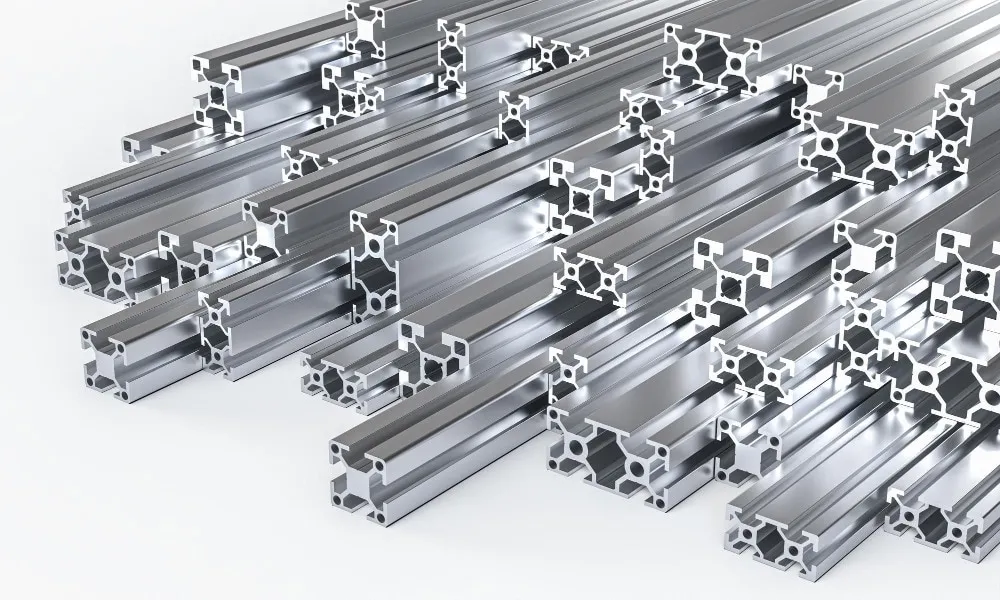
- Complete profile geometry, including outside dimensions, slots, cavities, corner radii and usable joining surfaces.
Many structural profiles use heat-treatable 6000-series alloys such as 6061 or 6105 in T5 or T6 temper. Do not assume either one. T5 means artificial ageing after cooling from the extrusion process; T6 includes solution heat treatment before artificial ageing, followed by artificial ageing. These tempers affect strength and fabrication behaviour.
A catalogue entry that says only “grade 8020” is insufficient for engineering comparison. A 13 mm thickness entry describes one wall or web dimension; it does not reveal the outside width and height, slot arrangement, cavities, radii or joining surfaces. Ask for the profile drawing and material certificate before approving an equivalent section.
How is an 8020 profile manufactured from billet to finished section?
The 8020 aluminium extrusion for manufacturing process starts with a cast aluminium billet, prepared to the specified alloy and cut after inspection for cracks, segregation and surface damage. The producer heats each billet within a controlled range, then loads it into a direct-extrusion press.
- The ram forces heated metal through a profile die. In one pass, the die forms the outside dimensions, T-slots, webs and corner details.
- A solid T-slot section uses a simpler die and metal-flow path. Hollow or multi-cavity sections need porthole or bridge dies, which demand tighter control of flow, internal weld quality and die strength.
- The emerging section moves along the run-out table for air cooling or quenching, then passes through stretching or straightening to remove bow and twist.
- The producer cuts stock or specified lengths, applies artificial ageing, and inspects dimensions, straightness, surface and cut quality.
Before making the die, confirm minimum wall limits, slot detail, metal flow, die strength, die cost and the minimum economical production length. Die wear, billet temperature, extrusion speed, cooling and stretching all affect slot width, wall thickness, bow and twist.
| Section type | Die and control demand | Result |
|---|---|---|
| Solid T-slot | Simpler die and flow path | Lower production complexity |
| Hollow or multi-cavity | Porthole or bridge die; weld and flow control | Higher dimensional and quality risk |
The final 8020 aluminium extrusion production stage can include deburring, polishing, anodising, mill finish or powder coating. Polishing is not anodising; ask whether polishing occurs before or after cutting.
Which dimensions and checks prove that the extrusion will fit?
Fit is proved by measured geometry, not by the label “8020.” Put these values on the profile drawing and quotation:
| Feature | Specify | Incoming check |
|---|---|---|
| Outside size | Width and height | Measure across several sections |
| Section | Wall or web thickness | Micrometer or calibrated gauge |
| T-slot | Opening width, spacing, depth and corner radius | Slot gauge and intended nut |
| Alignment | Straightness, bow and twist limits | Straightedge, feeler gauge and fixture |
| Cutting | Length tolerance and cut squareness | Tape or caliper and engineer’s square |
Similar-looking 8020-style sections are not automatically compatible. Confirm the exact slot series, then test the intended T-slot nuts, brackets, joining plates, end connectors and fasteners against the profile drawing or a physical sample. A nut that enters the slot but turns poorly is not a fit.
Require control to a named standard such as ASTM B221/B221M or EN 755-9; reject “precision extrusion” as a tolerance statement. Incoming inspection should record profile dimensions, slot or nut fit, bow, twist, surface defects, cut squareness, burrs, chips, length and quantity.
Ask for a mill test certificate identifying the ordered alloy and temper, a dimensional inspection report, hardness results and finish records if available. Do not assume these documents exist. Anodised lots can vary in shade, and saw-cut ends remain unfinished unless separately treated.
State the standard, tolerances, documents and acceptance method on the drawing or quotation.
Where do 8020 profiles work, and when is another frame better?
8020 aluminium extrusion applications include machine frames, workstations, safety guards, equipment enclosures, conveyors, automation fixtures, modular partitions and reconfigurable construction assemblies. Their main advantage is adjustable, demountable joining: slot nuts and brackets let you reposition components without welding or drilling the main members. Aluminium also reduces weight and joining time while supporting reuse.
Section size alone does not establish capacity. Check:
- Unsupported span, load direction and support spacing
- Allowable deflection and vibration
- Joint slip, fastener pull-out and bolt bearing
- Base anchoring and local slot strength
| Frame option | Main advantage | Better choice when |
|---|---|---|
| T-slot extrusion | Fast, adjustable and reusable | Loads change or the frame must be dismantled |
| Welded steel framing | Higher stiffness and rigid joints | Heavy concentrated loads or fixed structures govern |
| Aluminium box sections | Clean, light closed sections | You need a sealed shape and do not need frequent adjustment |
| Fabricated sheet-metal frames | Efficient panels and enclosures | Bent skins provide the structure or enclosure together |
| Standard T-slot profiles | Broad accessory compatibility | The specified slot series matches your nuts and brackets |
Choose another frame for high-temperature service, severe impact, welding-intensive designs or steel-like stiffness requirements. For humid or coastal Mumbai installations, add drainage, isolation washers and compatible fasteners; trapped water, damaged finish and dissimilar-metal contact can cause local corrosion. Select polishing, anodising, mill finish or powder coating for wear, appearance and corrosion exposure—not appearance alone.
What should you send an 8020 aluminium extrusion supplier in Mumbai?
A quotation is only comparable when it describes the finished part, not just “8020.” Send the supplier this checklist for a custom or repeat order:
1. Attach a dimensioned profile drawing showing outside width and height, slot opening and spacing, wall or web thickness, corner radii, alloy, temper, required mechanical properties, finish, and a named tolerance standard such as ASTM B221/B221M or EN 755-9.
2. State the number of full lengths, every cut length, cut-length tolerance, deburring, end tapping or drilling, protective film, individual wrapping, packaging and delivery location. Saw cutting can leave burrs, chips in slots and out-of-square ends.
3. Ask the 8020 aluminium extrusion supplier in Mumbai to confirm stock status, available standard lengths, die feasibility, die charges, minimum economical production length, cut-to-size capability, lead time, price basis, transport terms and repeat-order control.
If a 50 kg minimum applies, calculate the mass of required lengths plus cutting waste; do not compare it with the frame bill of materials alone.
4. Require confirmation that nuts, brackets and fasteners match the exact slot series. Reject “equivalent section” wording without a drawing and fit confirmation. Aluminium World can use this requirement to prevent a visually similar profile from reaching production.
5. Request a batch number, mill test certificate and dimensional inspection report if available. Define replacement, credit or rework when length, straightness, finish or slot-fit checks fail, and record the approved drawing revision for repeat orders.
Related product
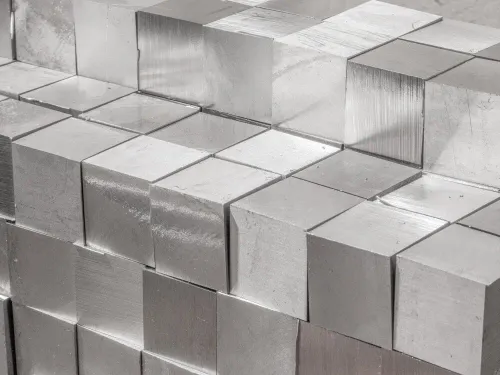
 | Aluminium Extrusions Minimum Order Quantity: 50 Kg Usage/Application Construction Thickness 13 mm Surface Finishing Polished Alloy Or Not Is Alloy Material Grade 8020... View product → |
Frequently asked questions
What does “8020 aluminium” identify?
It can identify an 80/20-style T-slot framing system, a profile-system name, or an 80 mm × 20 mm profile family. It does not automatically identify aluminium alloy 8020.
How is an 8020 aluminium profile manufactured?
A billet is heated, forced through a die to create the section, cooled, cut, heat-treated when specified, aged, finished and inspected before dispatch.
Which dimensions prove that an 8020 profile will fit?
Check the section drawing, outside dimensions, slot geometry, slot opening, wall thickness, cut length, straightness, twist, alloy, temper and compatible fasteners.
Where do 8020 profiles work, and when is another frame better?
T-slot profiles suit machine guards, workstations, fixtures, enclosures and modular frames. Choose another section for higher loads, severe vibration, airtight sealing or specialised structural requirements.
What should you send an 8020 aluminium extrusion supplier in Mumbai?
Send the required profile drawing, alloy and temper, lengths, quantity, finish, machining details, joining hardware, tolerances, delivery location and project application.
Keywords