Choosing an extrusion supplier by price per kilogram can leave you with the wrong temper, inconsistent anodising, unusable cut lengths or certificates that do not support your project. By the end, you will be able to match an alloy and temper to the job, write a measurable purchase specification and compare Mumbai suppliers on delivered performance rather than catalogue labels.
Key takeaways
- Write the complete alloy and temper, such as 6063-T5 or 6061-T6.
- Match 6063, 6005A, 6061 or 6082 to the fabrication load.
- Specify profile dimensions, tolerances, finish and inspection documents before ordering.
- Compare suppliers by conforming, traceable material—not only rupees per kilogram.
Read the alloy grade and temper as one specification
Read the alloy grade and temper as one specification. “6063 aluminium” is incomplete: 6063-T5 and 6063-T6 have different ageing histories and mechanical performance. Write the full designation on the enquiry and purchase order, such as 6063-T5 or 6061-T6.
Judge suitability against the load and joint design, not the alloy name alone. Check certified tensile strength, 0.2% proof stress, elongation and hardness for the specified temper, section thickness and test location.
A complicated extrusion can contain thin legs, thick hubs and unevenly quenched areas, so a catalogue value may not represent the weakest part of your profile.
Welding changes the decision. Heat can soften the T6 heat-affected zone in 6061 and 6082, reducing strength beside the weld. Design for that reduced joint-area strength, specify a suitable post-weld heat treatment, or choose an alloy and temper intended for welded fabrication.
Before accepting material from a supplier of aluminium extrusion alloys in Mumbai, request:
- The mill test certificate showing alloy, temper, chemical composition and mechanical results
- Lot or heat number matching the labels and delivery documents
- Profile dimensions, wall thickness and inspection results against the stated extrusion standard, such as EN 755-9
An extrusion alloy stockist can hold the right grade in the wrong temper, length or condition. Reject a match based only on “6063” or price per kilogram.
Choose 6063, 6005A, 6061 or 6082 for the actual fabrication
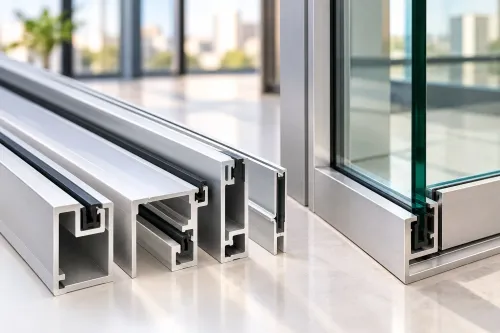
Use 6063 for visible architectural profiles, 6005A for moderately loaded frames, 6061 for machined or higher-strength parts, and 6082 for heavily loaded structural sections. Order the temper with the alloy: 6063-T5 and 6063-T6 are not interchangeable, nor are 6061-T6 and 6082-T6.
| Alloy | Best fit | Main trade-off |
|---|---|---|
| 6063 | Window frames, doors, trims and anodised architectural sections | Better surface appearance and thin-section extrusion, but lower strength |
| 6005A | Loaded frames, platforms and structural profiles | More strength than 6063 while retaining useful extrusion capability; confirm finish and temper |
| 6061 | Machine parts, brackets, tooling and medium-to-high strength frames | Strong and machinable, but less forgiving for premium anodised appearance |
| 6082 | Heavily loaded frames, beams and industrial sections | Highest strength of these choices, with more demanding extrusion and finishing |
Do not choose 6061 or 6082 for a welded T6 frame without checking the heat-affected zone: welding locally softens the T6 condition, reducing joint-area strength. Design that loss into the connection, specify a suitable post-weld heat treatment, or select an alloy and temper intended for the welded process.
6063 welds readily but gives up load capacity.
Ask an aluminium alloy profiles supplier in Mumbai for the proposed temper, section drawings and design loads before accepting a substitution. A 6005A profile is not an automatic replacement for 6063 when anodising colour, surface uniformity or thin-wall detail matters.
Specify the profile, tolerances and surface finish before ordering
Record the complete section drawing before requesting a quotation: profile designation, cross-section dimensions, wall thickness, tolerances, supplied length and surface finish. “6063, 50 mm” does not identify a manufacturable extrusion.
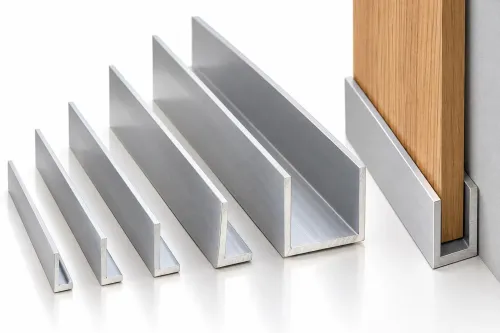
1. Define the geometry. State outside dimensions, internal webs, minimum wall thickness, corner radii, holes, slots and datum points. For hollow profiles, state whether the section is a frame or pressure-carrying tube, and specify acceptable port-hole or bridge-die seam marks.
2. Set extrusion tolerances against a named standard, such as EN 755-9 for general extruded products or EN 12020-2 for precision aluminium profiles. Specify limits for section dimensions, wall thickness, straightness, twist, corner radius and bow. Do not use these limits for drilling, punching, sawing or assembly; add those fabrication tolerances separately.
3. Specify length in a way production can use: fixed cut length, random supplied length, length tolerance and allowable saw-cut loss. A supplier holding the correct alloy can still send the wrong temper, surface condition or length.
4. Name the finish precisely. Choose mill finish, anodising or powder coating, then state colour, gloss, coating or anodic-film thickness, visible-face requirements and protected areas. A decorative 6063 surface can expose die lines or scratches that a structural mill finish would accept.
5. For a custom profile, obtain die cost, minimum order quantity, trial-approval process, die ownership and re-order policy before approving the drawing. A “standard” section that needs a new die can add weeks to delivery.
Require lot traceability and inspection evidence
A certificate without a matching lot number proves little. Your purchase order must identify the alloy and temper together—such as 6063-T5, 6063-T6, 6061-T6 or 6082-T6—and name the governing product standard, profile drawing, finish and dimensional tolerance.
Request these documents before dispatch:
- A mill test certificate, preferably EN 10204 3.1, showing the heat or cast number, alloy chemistry, temper, tensile strength, yield strength and elongation.
- A dimensional inspection report listing profile dimensions, nominal and minimum wall thickness, supplied length, straightness and twist against your approved drawing or specified standard.
- A coating or anodising report stating coating thickness, colour reference and inspection lot when the profile is finished.
| Evidence | What it proves | What to match |
|---|---|---|
| Mill certificate | Chemistry and mechanical properties | Alloy, temper and heat number on the order |
| Dimensional report | Profile conformity | Drawing, tolerances, wall thickness and length |
| Packing list and bundle tags | Physical traceability | Bundle numbers linked to the certificate |
| Finish report | Surface-treatment conformity | Anodising or coating specification and lot |
On receipt, photograph bundle tags before cutting. Match every tag to the certificate, then check alloy marking, profile dimensions, wall thickness, cut length and visible damage. Use calibrated callipers and a wall-thickness gauge; use XRF only as a chemistry screen, because it cannot confirm T5 or T6 temper.
Reject untraceable bundles rather than blending them into a finished elevation.
Compare Mumbai suppliers on usable material, not rupees per kilogram
Compare the landed cost per usable metre, not the quoted rupees per kilogram. A low rate can become expensive when the supplier delivers short lengths, excessive straightening loss, the wrong temper or coating that fails your finish inspection.
| Offer type | What to compare | Evidence to require before ordering |
|---|---|---|
| Standard 6063, 6061, 6005A or 6082 section | Alloy and temper, straightness, wall thickness, supplied length and cut tolerance | Purchase order stating, for example, 6063-T5 or 6082-T6; mill certificate; dimensional inspection report |
| Stock from an extrusion alloy stockist in mumbai | Whether the stock has the ordered temper, current lot, surface condition and full traceability | Heat or lot number, certificate matching the delivered bundle, actual length schedule and photographs of surface defects |
| Custom die profile | Die charge, minimum quantity, trial approval, die ownership, repeat-order policy and expected lead time | Approved drawing with tolerances, sample sign-off, written die terms and a production date separate from dispatch date |
| Anodised façade or window profile | Consistent chemistry, billet lot, shade, gloss, coating thickness and batch control | Coating specification, sample approval and a single controlled lot for the elevation |
Your purchase order should record alloy, temper, standard, nominal and minimum wall thickness, finish, length, allowable cut loss, certificate requirement and lot traceability. Ask for mechanical properties tied to the actual section or test location; a catalogue value can misrepresent thin legs, thick hubs or poorly quenched zones.
An aluminium extrusion alloy supplier in mumbai such as Aluminium World should also explain whether a quoted section is stocked or requires a die. Treat “available” as unverified until the supplier confirms usable length, inspection evidence and dispatch timing.
Related products
 | Aluminium Extrusions Minimum Order Quantity: 100 Kg Usage/Application Construction Thickness 8 mm Surface Finishing Polished Alloy Or Not Is Alloy Is It Anodized Anodized... View product → |
 | Aluminium Extrusions Length 12 Feet Shape Square Usage/Application Industrial Thickness standard Surface Finishing standard We, “Aluminium World” are a “Manufacturer And... View product → |
Frequently asked questions
Why must you specify the aluminium alloy grade and temper together?
The grade identifies the alloy chemistry, while the temper records its heat-treatment or work-hardening condition. 6063-T5 and 6063-T6 therefore have different mechanical performance. Put the complete designation on your enquiry and purchase order.
Which aluminium extrusion alloy should fabricators choose?
Choose 6063 for architectural profiles and finish quality, 6005A for stronger structural sections, 6061 for a balance of strength and machinability, and 6082 for higher structural loads. Confirm the required strength, weldability, forming and surface finish before selecting.
What details should an extrusion order include?
State the profile drawing, alloy and temper, dimensions, straightness and dimensional tolerances, length, quantity, surface finish, packaging and inspection requirements. Attach revision-controlled drawings when the section is custom.
What traceability and inspection evidence should you request?
Request the lot or heat number, material test certificate, chemical composition, mechanical test results, dimensional inspection report and surface-finish records. Check that the documents identify the supplied profile and match the purchase order.
Related products
 | Aluminium Extrusions 12mm Polished Aluminium Extruders Minimum Order Quantity: 50 sq ft Usage/Application Construction Thickness 12 mm Surface Finishing Polished Alloy Or Not Is Alloy Country of Origin... View product → |
 | Aluminium Extrusions Length 12 Feet Shape Square Usage/Application Industrial Design Germany Thickness standard Surface Finishing standard We, “Aluminium World” are a... View product → |
 | Aluminium Extrusions Shape Square Usage/Application Industrial Design Germany Thickness standard Surface Finishing standard We, “Aluminium World” are a “Manufacturer And... View product → |
 | Aluminium Extrusions Usage/Application Construction Surface Finishing Polished Position Interior Alloy Or Not Is Alloy Packaging Type Loose Is It Anodized Anodized... View product → |
Keywords