


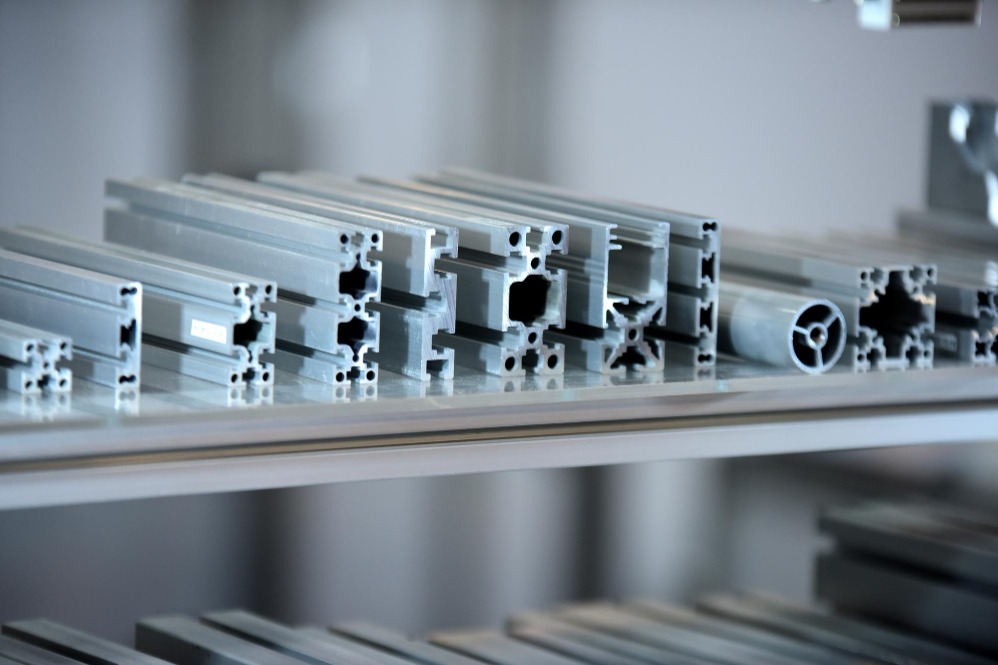
Extruded aluminium is found in everything from architectural frames and partitions to equipment components and specialised fabricated assemblies. Yet two aluminium profiles that appear similar can perform very differently when their alloy, geometry, tolerance or finish does not match the intended application.
Understanding these factors makes it easier to evaluate an aluminium extrusion manufacturer for projects in Mumbai and elsewhere in Maharashtra.
What is an aluminium extrusion?
Aluminium extrusion is a manufacturing process in which aluminium is forced through a shaped die to produce a continuous profile. The resulting profile can have a simple shape, such as a channel or angle, or a more detailed cross-section designed for a particular assembly.
The main advantage is design flexibility. Extrusion makes it possible to create profiles with channels, grooves, cavities and other functional features incorporated into the cross-section.
Where are aluminium extrusions commonly used?
Applications include:
- Windows and doors
- Office partitions
- Architectural framing
- Furniture systems
- Display structures
- Machinery
- Industrial assemblies
- Electrical and engineering applications
The requirements vary significantly between these applications. An architectural profile may prioritise appearance and finish, while an engineering profile may depend more heavily on dimensional accuracy and functional geometry.
Why profile specifications matter
Buyers should avoid procuring aluminium extrusion only by visual reference. A proper specification should identify dimensions, thickness, finish and application.
For projects requiring several identical fabricated units, tolerance consistency becomes especially important. Even relatively small dimensional variations can create problems during machining, joining or assembly.
Finish should also be defined before procurement. The visual requirements of a premium commercial interior, for example, may be very different from those of an industrial component that remains hidden inside equipment.
Standard profiles or application-specific requirements?
Standard aluminium profiles can be practical when commonly available dimensions meet the project's needs. They can simplify procurement and often make replacement easier.
Application-specific profiles become relevant when the design requires a particular cross-section or functionality that standard sections cannot provide.
Architects and engineers should therefore determine whether the project genuinely requires a specialised profile before specifying one.
Better procurement starts with better information
When approaching Aluminium World in Mumbai, buyers can make discussions more productive by sharing drawings, sample references, dimensions, quantities, surface requirements and intended applications.
This allows the requirement to be assessed as a complete specification rather than simply an enquiry for aluminium by weight or size.
For procurement managers, another important consideration is quantity planning. Large construction and manufacturing projects may need material in phases. Establishing requirements early can help coordinate procurement with fabrication and installation schedules.
Choosing extrusion products is ultimately an engineering and application decision. Buyers who define profile geometry, tolerances, finish and end use before purchasing can reduce uncertainty and improve fabrication efficiency.


